Hockey rules for beginners
You do not need the full rulebook to enjoy a game. A handful of hockey rules explain most of the whistles, and they are easier than they look once you know where the lines on the ice are.
The rink and the periods
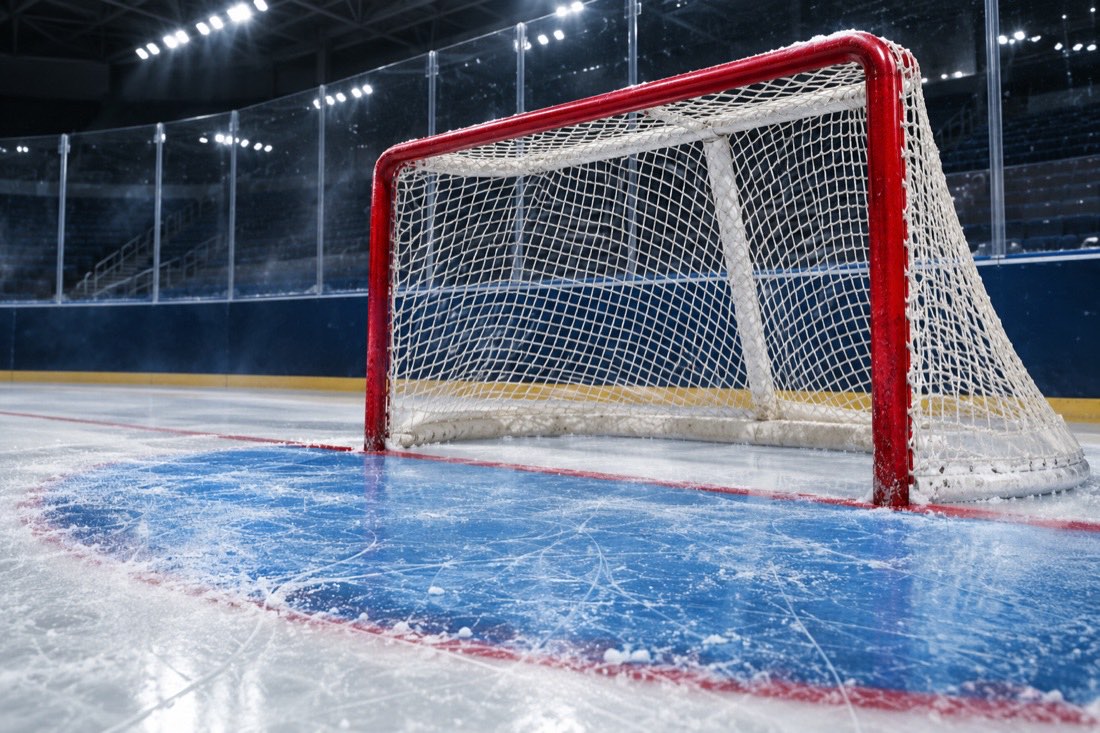
The ice is divided by painted lines. The red line across the middle is the centre line. Two blue lines split the rink into three zones: each team's defensive zone, the neutral zone in the middle and the attacking zone in front of the opponent's goal. A thin red goal line runs across each end of the rink, and the goals sit on it.
A professional game, in the NHL and in the AHL, ECHL and SPHL alike, has three periods of 20 minutes of playing time. The clock stops whenever play stops.
Offside
Offside keeps attackers from waiting in front of the goal for a long pass. The rule is simple: the puck must cross the blue line into the attacking zone before the attacking players do. A player is offside if both of his skates have completely crossed the leading edge of the blue line into the attacking zone before the puck.
When a linesman sees an offside, he blows the whistle and play restarts with a faceoff.
Icing and hybrid icing
Icing stops a team from simply firing the puck the length of the ice to relieve pressure. It happens when a player shoots the puck from behind the centre red line and it travels across the opponent's goal line without anyone touching it.
In the NHL, hockey rules on icing use a version called hybrid icing. Instead of making players race all the way to the puck behind the goal line, the linesman judges a race to the faceoff dots. If the defending player would get to the puck first, he calls icing and stops play. If the attacking player wins that race, play continues. It is a judgement call, which is why you sometimes hear the crowd disagree.
Penalties
When a player breaks a rule, for example by tripping or hooking an opponent, the referee calls a penalty. For a minor penalty, the player serves two minutes in the penalty box while his team plays short-handed. The team with the extra skater is on the power play. Bigger infractions bring longer penalties.
Overtime and the shootout
What happens if a game is tied after three periods? Hockey rules on overtime differ between leagues and between the regular season and the playoffs. In the AHL regular season, a tied game goes to a five-minute overtime period played 3-on-3, three skaters and a goalie on each side, which opens up the ice. The first goal wins.
If no one scores, the game goes to a shootout, with each team getting three attempts: a skater starts at centre ice and goes one-on-one against the goalie. If the teams are still level after three rounds, the shootout continues round by round until one team scores and the other does not.